· 4 min read
How to set up a small play corner children actually use
A play corner rarely gets its own room. Usually it is two square metres in the corner of a hall or a bedroom. That is enough, if you use the height, choose things that do two jobs, and leave room to move

A play corner rarely gets a room of its own. Usually it is two or three square metres in the corner of a hall, a child’s bedroom, or a waiting area. That is enough, provided you treat the corner as a design problem rather than as the place where toys end up.
A good corner does three things: it allows movement, it can be tidied fast, and it can be changed when the child outgrows it. Here is how to get all three out of a small footprint.
Planning the space
Use the height, not the floor
Floor area is the expensive part, because that is where play happens. Anything that can go on the wall should: shelves, a board, pockets for small things, hooks for dressing-up clothes. A practical rule: below one metre, mount what the child uses independently; above that, what an adult reaches for.
Choose things that do two jobs
In a small corner every object should earn its place twice. A crate that is also a seat. A beanbag to sit on and to knock over. A mat that rolls into a bolster. One fewer piece of furniture is half a metre more floor.
Design the tidying in from the start
A corner that cannot be cleared in three minutes stops being used within a month. Open bins rather than boxes with lids, one place per category, at a height the child can reach. Tidying should be part of the play, not a punishment after it.
What to put in it
Something to climb
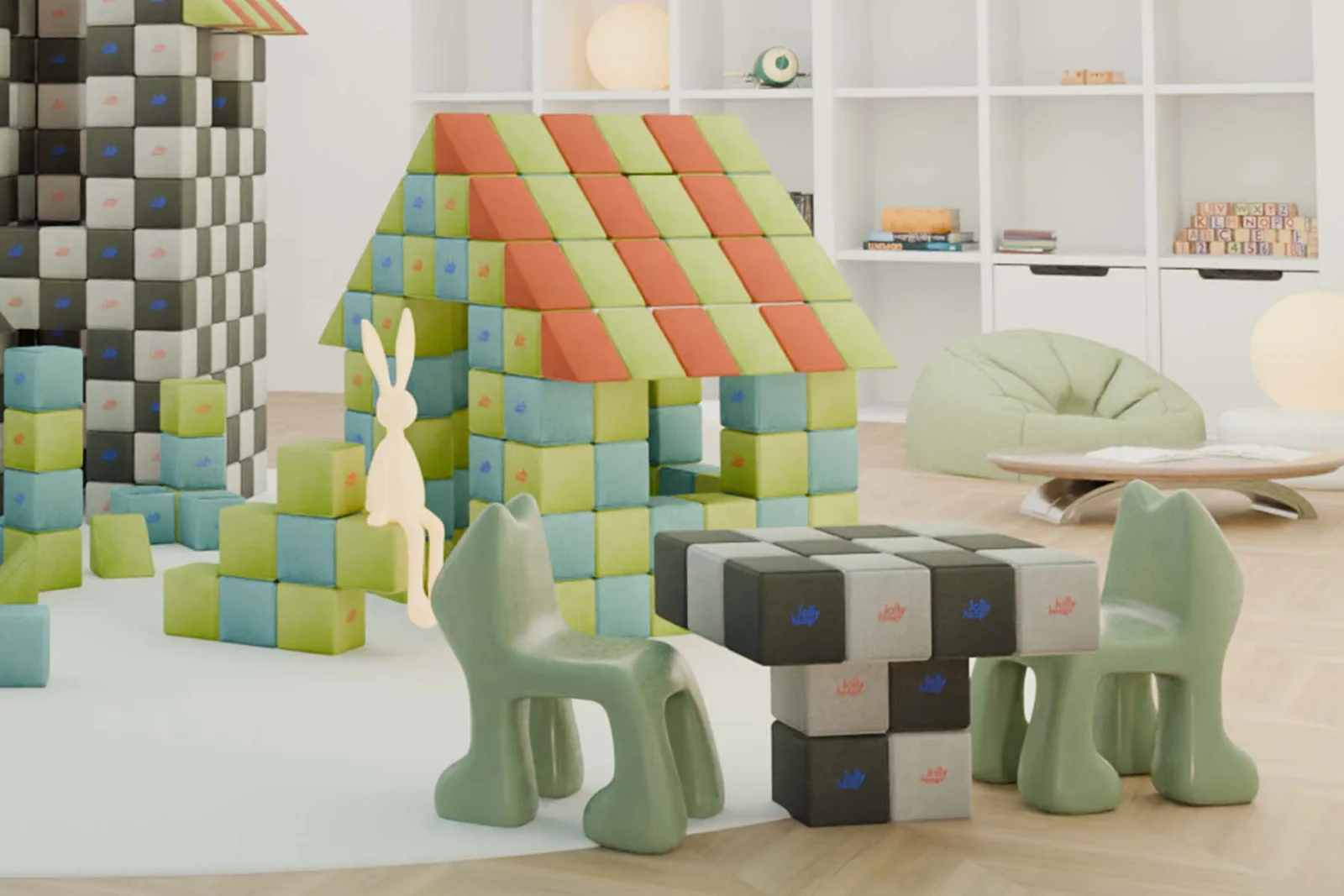
Even a low structure (two steps and a platform) gives a child something no floor toy can: a change of perspective and whole-body work. In a small space, elements that can be taken apart when not in use earn their keep.
A pretend-play corner
A kitchen, a shop, a doctor’s office: it does not need to be a purpose-built unit. A crate, a few props and an agreement that this is the counter will do. The less literal the equipment, the longer the child stays with it.
Somewhere to sit and read
Cushions, a blanket, a basket of books. One function that requires quiet should always be present, so the child has somewhere to come down.
A set of blocks big enough to build with
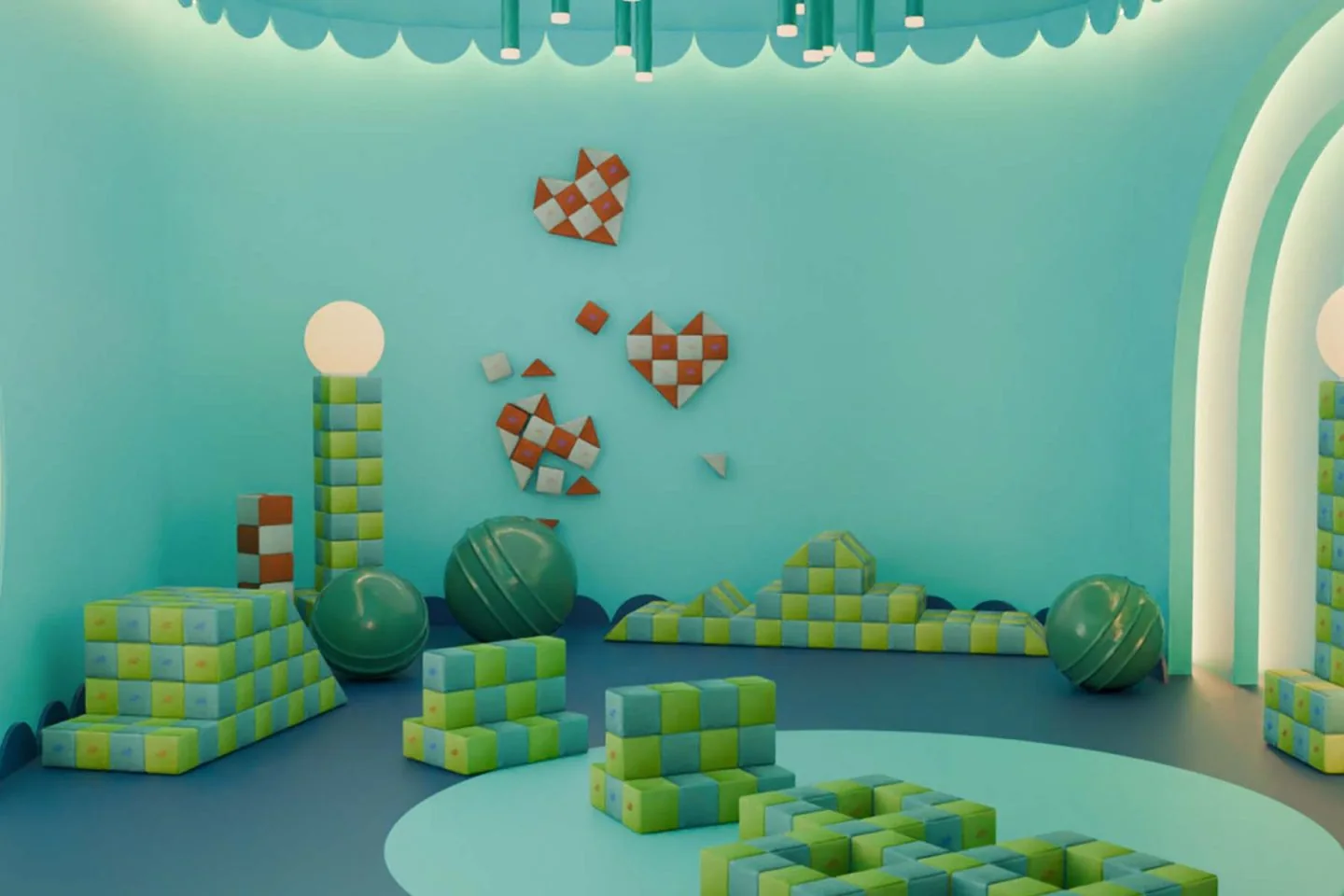
This is the element that works hardest per square metre. A set of large soft blocks is a wall, then a tunnel, then a step, and in the evening it goes back against the wall as a stack. It takes no permanent place in the layout, because its place changes daily.
Safety in a small space
In a tight corner, safety comes down to three things:
- A soft floor. A foam mat or carpet with underlay. Not so the child never falls (they will), but so that falling does not matter.
- Everything tall anchored to the wall. A shelf unit a child can pull over is the most serious hazard in any play corner. Wall anchors, no exceptions.
- No hard edges within reach. Furniture corners, protruding handles, sharp edges at head height. In a small footprint a child has less room to slow down, so the margin for error is smaller than in a large hall.
What not to do
- Do not fill it. A corner that is 100% full is a corner where nothing can be built. Leave open floor. That is not wasted space, that is the space to play in.
- Do not fix everything in place. Children develop faster than equipment wears out. What can be moved survives three changes of interest; what is screwed down survives one.
- Do not buy by theme. A pirate set is a pirate set. A neutral set is pirates, then a hospital, then a garage.
In short
A small play corner does not need more square metres. It needs fewer things and better decisions. Height instead of floor, multi-function instead of matching sets, open space instead of filling. The rest takes care of itself, because a child will arrange the corner their own way if you let them.
JollyHeap blocks are built for exactly these conditions: light enough for a child to move alone, soft on every edge, and joined by magnets, so one set covers many layouts. See the sets or look at ready-made build ideas.