· 5 min read
Play therapy: why therapy does not have to be hard work
A child who will not talk about a difficult experience will often act it out. Play therapy uses that: what the child cannot put into words, they put into a game. How it works, what a session looks like and what the room needs

Ask a seven-year-old to describe what frightened them and you will usually get a shrug. Give the same child a set of figures and a few blocks, and within ten minutes the frightening thing has a shape, a place and an ending. That gap between what a child can say and what a child can show is the whole basis of play therapy.
Play therapy is not a lighter version of real therapy. It is a method built around the fact that children process experience through action long before they can process it through conversation. The therapist does not sit opposite the child asking questions. They sit alongside and pay close attention to what is being built, knocked down, hidden and rescued.
What play therapy gives a child
A way to say difficult things
Toys let a child express feelings and events symbolically, without having to name them. A doll can be afraid so the child does not have to admit to being afraid. A tower can fall over and be rebuilt. This is far less intimidating than a direct question, and for a child who does not yet have the vocabulary for their own emotional states, it is often the only route available.
A relationship the child actually wants
Because play is enjoyable, the child comes to see the therapist as a companion rather than as someone administering a procedure. That rapport is not a pleasant side effect. It is the working condition. A child who feels safe reveals more, tries more, and tolerates more difficulty in a session.
Setting up the room
A small space is enough
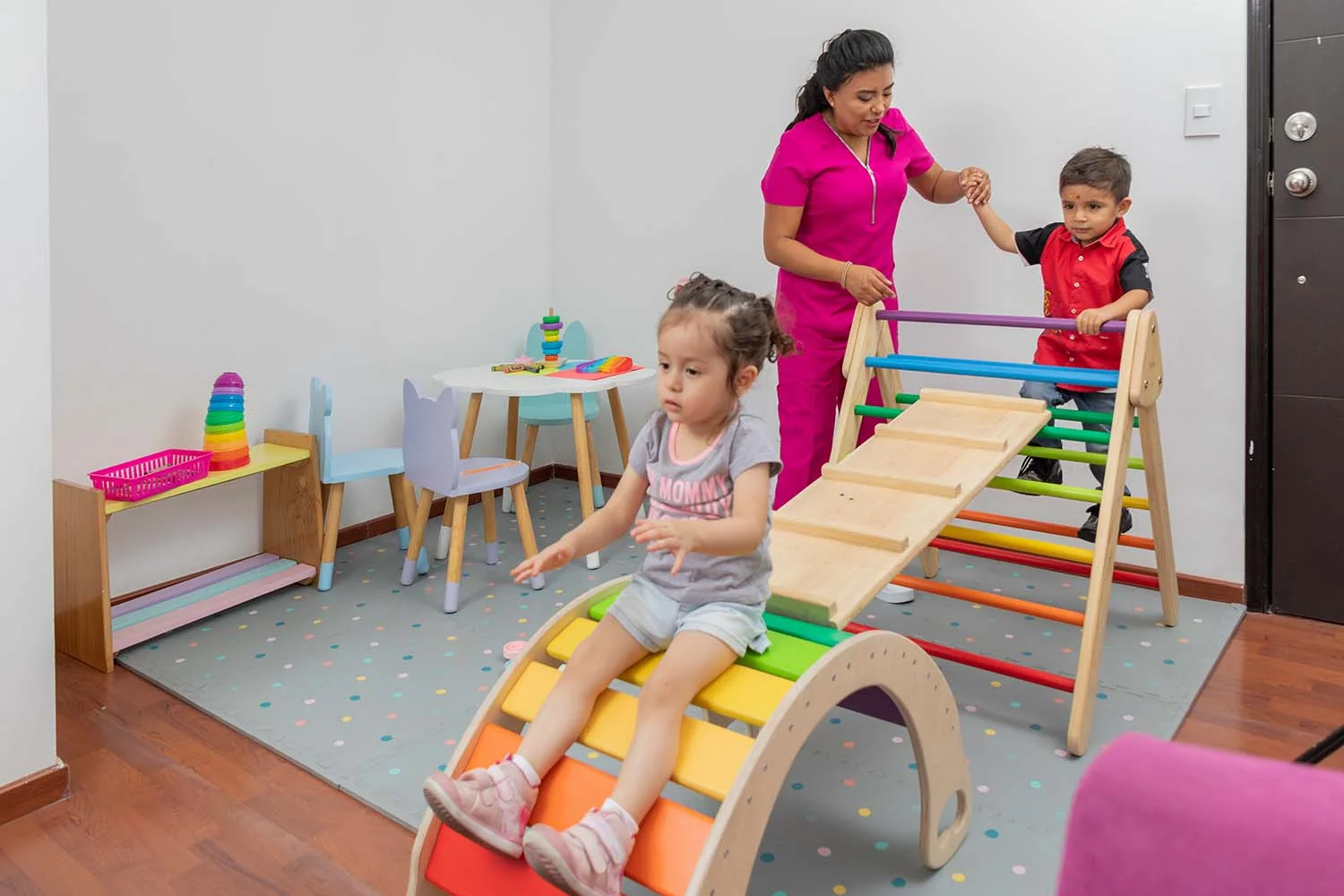
An effective play therapy space does not require a large room. What matters is organisation: accessible storage so the child can choose materials independently, a clear floor area for movement, and a corner that can be made quiet. Bins and low shelves do more for a session than square metres do.
Bring in elements of an indoor playground
Soft modular structures, tunnels and something to climb add physical activity to the session, which matters twice over. It is good for the body, and it gives the child a legitimate way to discharge tension in the middle of difficult material. A session that can move between building, climbing and sitting still holds a child much longer than one that happens at a table.
Techniques you will meet
Role play
Taking on a role lets a child express feelings they would not otherwise acknowledge. Playing the parent, the doctor or the villain is a safe way to try out responses to situations that are hard in real life, and to see what happens when the response changes.
Art and construction
Drawing, painting and building make inner states tangible. What a child builds, and how they treat what they have built, carries information that no interview would produce. Constructive play in particular gives a therapist something to observe over time: does the structure get taller, safer, more enclosed?
Storytelling
The therapist starts a story and the child continues it. Narratives children invent tend to reflect their own concerns and hopes closely, and finishing a story gives the child a way to give a difficult situation an ending, one that reality has not yet provided.
Different ages, different play
Young children. Verbal communication is limited, so dolls, blocks and play sets carry most of the work. Play relaxes the child and lowers the threshold for expression.
Adolescents. More structured forms tend to work better: strategy games, role-playing games. They give a frame for talking about social anxiety, cooperation and problem-solving without the conversation being about the teenager directly.
Adults. Less often, but it works for them too: metaphorical card sets, board games, creative tasks. For someone who finds direct conversation difficult, an indirect route is worth having.
Continuing at home
A play corner
A dedicated, safe corner with varied materials (art supplies, building blocks, figures) extends the work of the session into daily life. Three rules make it function:
- Keep it free of distractions and hazards.
- Stock it for different kinds of play: creative, constructive, imaginative.
- Let the child arrange it. Ownership is part of what makes the corner useful.
Techniques in ordinary moments
Talking through a puppet at bedtime, inventing a story together, letting the child direct a game: these are not therapy, but they use the same mechanism, and they keep the channel open between sessions.
Where soft blocks fit
Large magnetic foam blocks are a useful piece of kit in a therapy room because they cover several needs at once: constructive play, a climbing structure, a physical obstacle to overcome, and the walls of a quiet corner when a child needs to withdraw. The therapist reconfigures the room around the child rather than fitting the child around the room.
See the sets, or read how the blocks are used in therapy.
In short
Play therapy works because it meets children where they already are. It does not ask a child to translate their experience into adult language before it can be addressed. Given a room they can move in, materials they can shape, and an adult who watches without directing, most children will show you what is going on long before they could tell you.